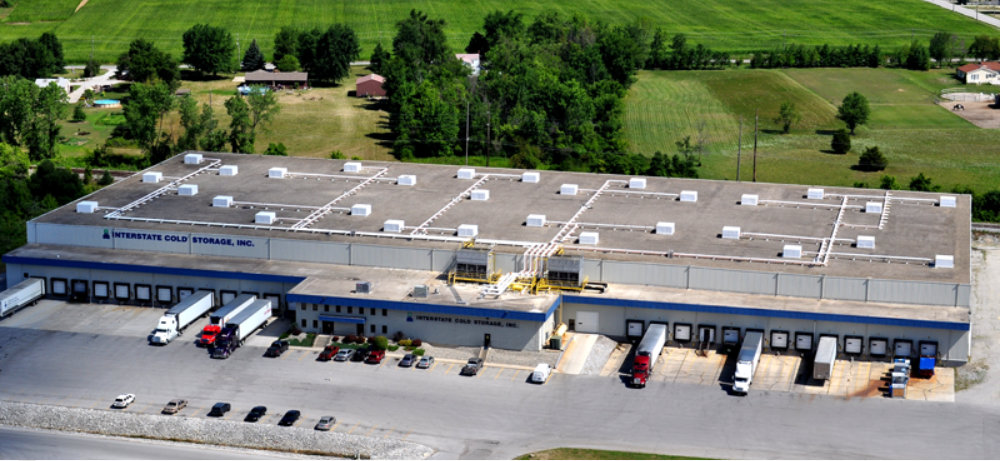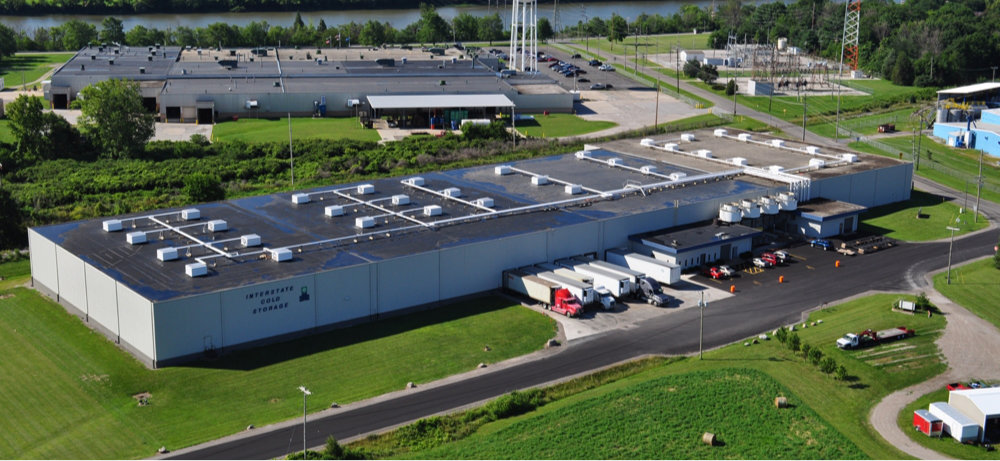






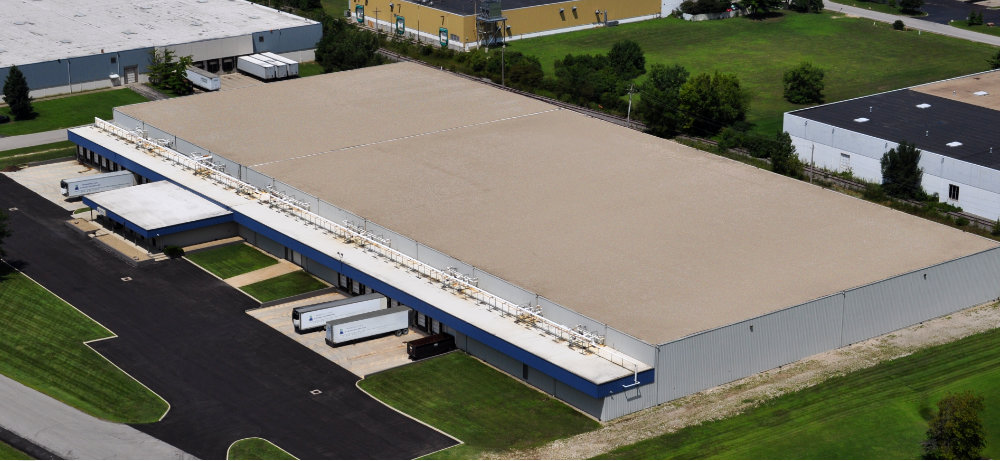
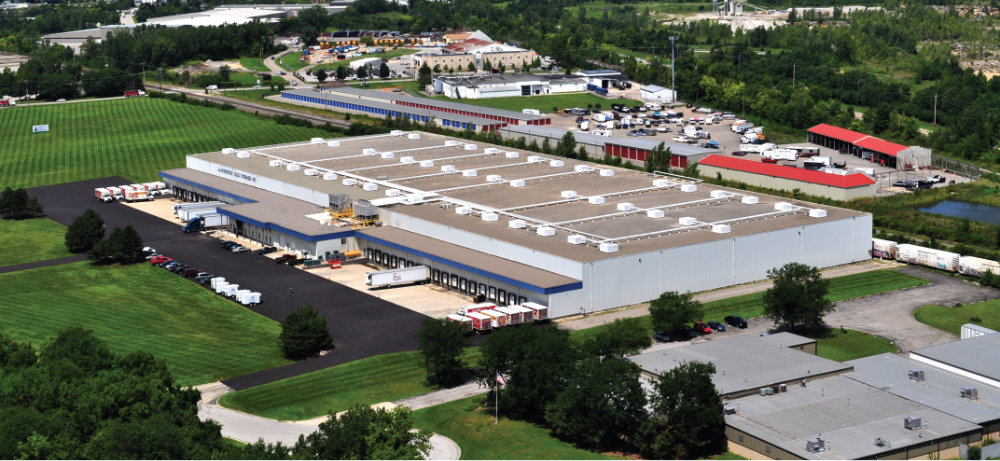
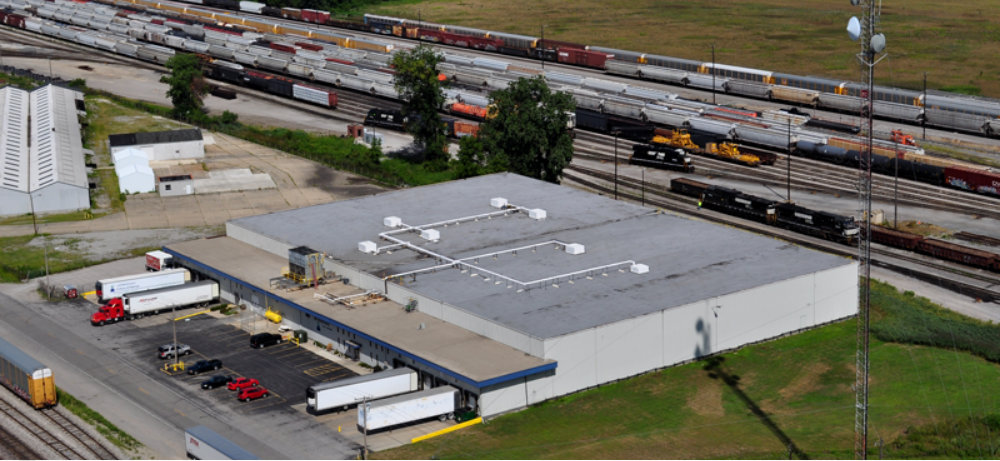
We operate both what’s known as “bulk” and “distribution” (aka “selective”) cold storage systems. Bulk cold storage has deep bays to accommodate large quantities of the same type of product and thus is best for companies that ship full truckloads of pallets with the same SKU into cold storage and don’t require case- or specific-pallet picking.
Distribution cold storage, on the other hand, stores pallets 1-deep or 2-deep selective racking to support case picking, specific pallet picking and small production batches, and as such is better for companies with diverse SKUs or ship LTL.
We operate facilities that offer both bulk and distribution storage under one roof, often called “hybrid” cold storage. Hybrid offers the best of both worlds, with faster inbound/outbound turn-around times, easy case picking and a great balance of cost-effectiveness and flexibility.
Not sure which is right for your company? See our explainer comparing bulk vs. distribution cold storage.
Food and beverage companies requiring cold storage make up the largest portion of our business, relying on our facilities to maintain product quality safety throughout the supply chain. Our cold storage facilities serve a number of Midwest-located pharmaceutical and biotech companies as well, safely storing products with highly precise climate control and documented chain of custody. Our five cold storage warehouses strategically located across Indiana and Ohio put us right in the heart of major distribution corridors, making it easy for these companies to reach both regional markets quickly and connect to national shipping networks.
Temperature control comes down to having multiple safeguards working together at every step. Our facilities are divided into separate rooms that can each maintain different temperature ranges, so frozen goods stay frozen while chilled products get exactly the conditions they need. We monitor temperatures continuously with physical thermometers manually logged daily, as well as redundant digital sensors that alert us immediately if anything drifts out of range, and our staff follows strict protocols for everything from receiving shipments to loading trucks. For pharmaceutical clients especially, we maintain detailed logs and backup systems. Our recent SQF certification at the Columbus II facility reflects the safety standards we maintain across all operations, ensuring that whether we're handling fresh produce or critical medications, products leave our warehouses in the same condition they arrived.
Ranges vary by facility and room. Across our network, we offer frozen, refrigerated, and controlled‑ambient options. Standard program ranges run from −15°F to 40°F, with ultra‑low temperatures available on request. Check our individual Locations for exact setpoints per facility.
We work closely with our clients to anticipate busy periods like harvest season, holiday promotions, or product launches, helping map out storage needs months in advance so you're never caught off guard. Our hybrid bulk-distribution systems are particularly well-suited for these seasonal spikes since they can efficiently handle large incoming volumes while maintaining the flexibility to shift quickly into distribution mode when demand picks up.
Of course, we also understand that sometimes the unexpected happens. That's where our temporary and overflow cold storage options come in handy, giving you the space you need without locking into long-term commitments. With facilities spread across Indiana and Ohio, we can usually accommodate surge capacity somewhere in our network, keeping your products moving even when volumes fluctuate unpredictably.
Yes! We support re‑packing, slip sheeting, labeling/stamping, stretch wrapping, USDA inspection services and much more—so you can consolidate vendors and keep turns moving.
We operate five facilities strategically positioned along major interstate corridors in Ohio and Indiana: two locations in Columbus, Ohio, two in Fort Wayne, Indiana, and one in Napoleon, Ohio. These sites put us within easy trucking distance of major manufacturing centers and population hubs throughout the Great Lakes region, while connecting seamlessly to national shipping routes. Share details about where your production facilities and key customers are located, and we can help you determine which of our facilities offers the best logistics advantage for your products.
You can get started by reaching out through our quote request form with basic details about your temperature requirements, volume needs, and any special handling your products require. If you prefer to talk through your situation first, give us a call and we can walk through your specific challenges together; sometimes a conversation helps us understand nuances that don't come across in a form. Either way, we'll put together a customized proposal that takes into account not just your storage needs, but also your shipping patterns, seasonal fluctuations, and any unique requirements your products might have. Every business is different, so we make sure our recommendations actually fit how you operate.
Lead times vary by market tightness, season, temperature range, and whether you need dedicated or shared space. For planned programs, expect a minimum of a few weeks to scope requirements, sign a contract, and complete onboarding (WMS setup, SOP alignment, temperature mapping, etc.). Once onboarded, though, most providers can schedule inbound appointments within a few business days, though peak seasons may require additional notice.
Prioritize food‑safety credentials (FSMA/HACCP, USDA oversight, GFSI), validated temperature control and proven reliability. Location and network fit, redundancy (backup power, multi‑site options), and technology (live inventory visibility, EDI/API, and excursion alerts) are also important when comparing cold storage facilities.
For more information, see our full guide to choosing a cold storage facility.
Rates are typically quoted per‑pallet‑per‑month plus in/out handling, with accessorials for services such as case picking, blast freezing, tempering, and special projects. Pricing also depends on location, temperature band, dwell time, volume, seasonality, and contract term.
Share your program details with one of our experts to get a fast, tailored estimate.
Yes. Interstate’s WMS supports both FIFO and FEFO, with lot/expiration tracking and rule‑based allocation to ship in the correct sequence. Reports and cycle counts help verify compliance with your SOPs.
Yes. Interstate offers quick‑freezing services that reduce ice‑crystal formation and help lock in quality compared with standard static freezing; availability varies by location and product type. Share your target core temperature and throughput requirements to confirm capacity and timelines.
Yes. Interstate offers short‑term and emergency cold storage capacity for overflow, holdovers, and unexpected disruptions, with flexible terms and rapid onboarding subject to availability.
Contact us today for current capacity and temperature ranges.